.png "progetto senza titolo (33)")
TCA 2025: National seminar on evaluation and monitoring. Rome, 22 and 23 January 2026.
On January 22 and 23, 2026, the 2025 TCA National Seminar was held in Rome, dedicated to a central theme for those who work every day in the Erasmus+ world: evaluation and monitoring. Two words that are often seen as "technical," almost cold, but in reality tell a very concrete story: how can we understand if what we are doing really works.
The aim of the meeting was precisely this: to provide space for discussion and useful tools to make projects more effective, more measurable, and above all more capable of generating a real impact on participants and communities.
TCA (Training & Cooperation Activities) represent an important opportunity for those working in youth work and European educational contexts. They are not simply “training moments,” but spaces where organizations, youth workers, and stakeholders can share practices, improve methodologies, and build new collaborations.
Participating in a TCA means stepping out of the routine, seeing how others work, and bringing back to your own daily context not only ideas, but also a concrete drive to do better.
The day: from group connection to thematic work
The meeting opened with a sharing and discussion session, in which participants also contributed through a dedicated Padlet, responding to a simple yet powerful question: “How is a TCA useful in our work?” A moment of exchange that immediately placed the practical and lived dimension of the experience at the center, valuing the perspective of those who actually work in the field.
Among the activities, an energizer called “Sound Wind” was proposed, a group exercise based on increasing gestures and sounds, which allowed for the activation of attention, listening, and synchronization. An apparently light activity, but very effective for training fundamental skills in youth work: non-verbal communication, presence, shared rhythm, and the ability to observe others.
Thematic tables and ideas for future TCAs
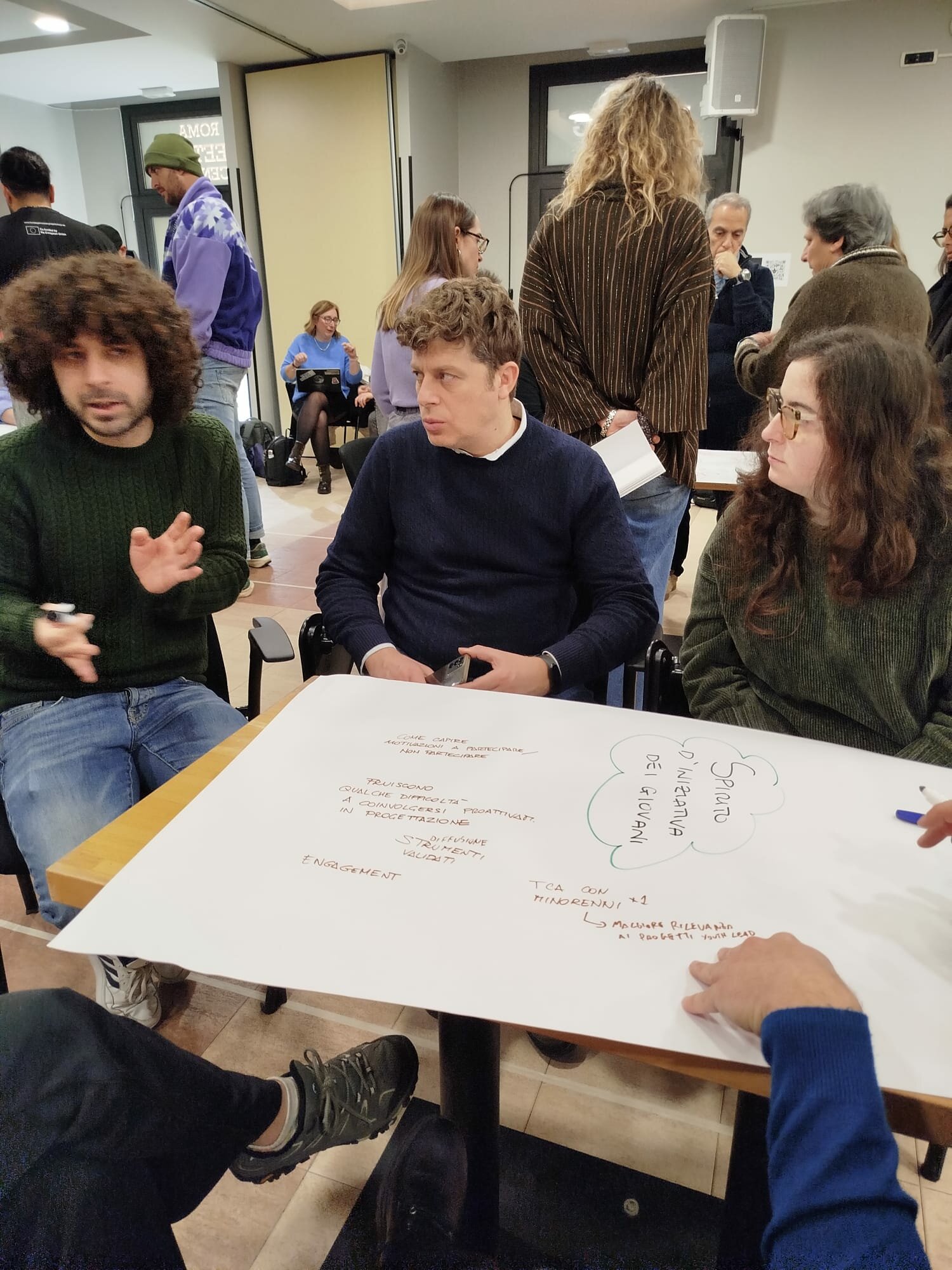
The heart of the seminar was the work in thematic tables, organized in a dynamic way: about 20 minutes of discussion per table and then a group change, so as to circulate different ideas and points of view.
Among the ideas that emerged, the most felt themes concerned participation and democracy, sustainability and psycho-social well-being and, more generally, the need to find new ways to increase youth participation.
In a European context where civic education, sense of belonging, and the involvement of new generations are increasingly central, youth work becomes a fundamental bridge between democratic values and real life. Not an abstract concept, but a set of practices and tools that can be translated into activities, workshops, and educational paths.
During the discussion, the New Democracy Workbook 2025 was also mentioned, a useful resource that offers ideas and activities to use with participants precisely on these topics, providing practical and replicable input.
SNAC and new opportunities for European collaboration
Another important topic addressed in the seminar was that of SNAC (Strategic National Agencies Cooperation) activities, that is, networks and strategic collaborations between national agencies working to improve the quality of youth work at the European level.
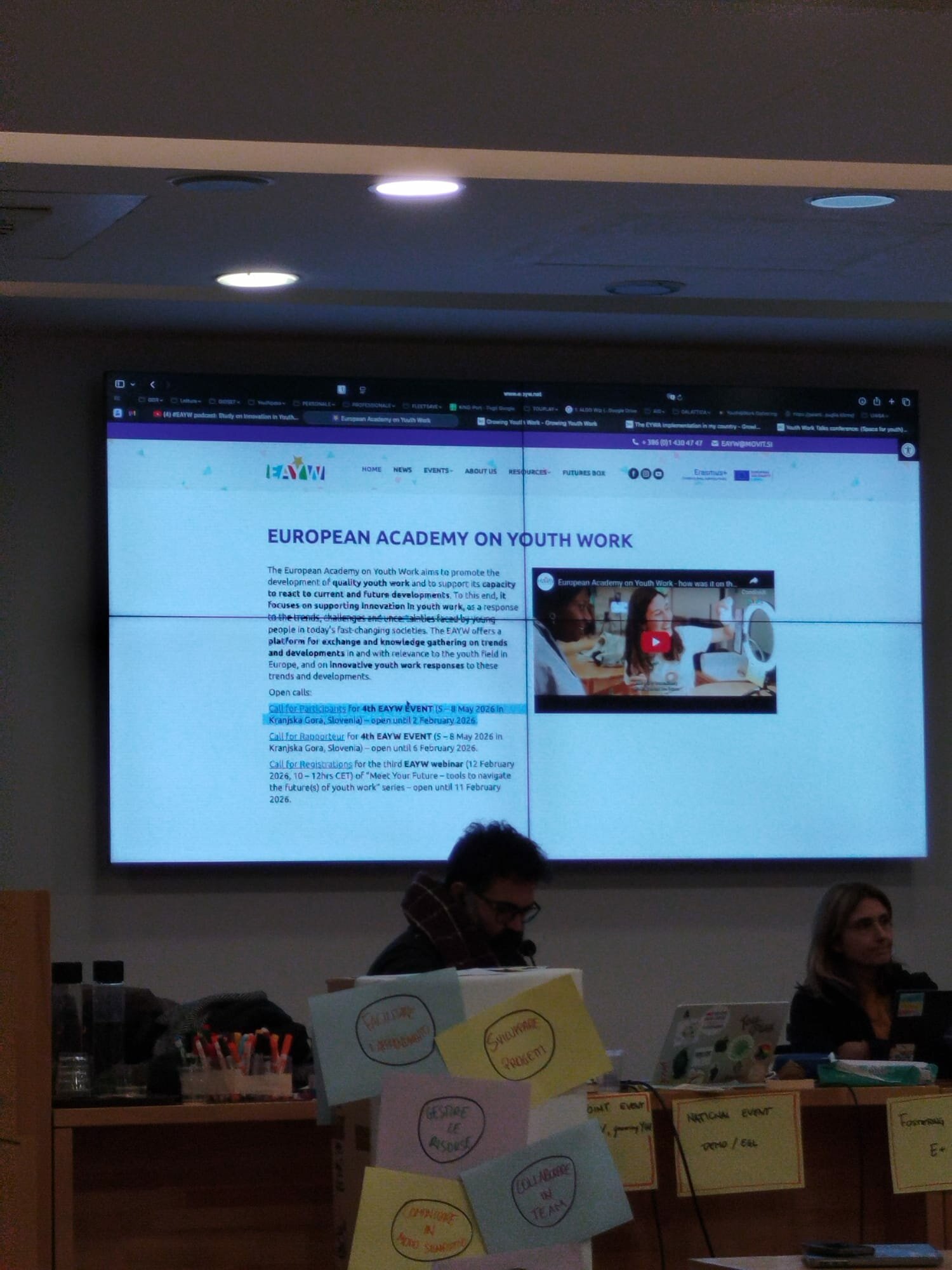
In particular, the value of platforms and pathways such as the European Academy on Youth Work and the growth opportunities linked to Europe Goes Local emerged, initiatives that allow participants to stay connected to emerging trends and professional development pathways in the sector.
These spaces represent a concrete opportunity for those who want to update their skills, receive training, and collaborate with international organizations in a structured way, without improvising.
Conclusions: quality is born from comparison
The TCA 2025 National Seminar demonstrated how evaluation and monitoring are not simply a “box to tick,” but an empowerment tool for those working on projects. Because measuring means being able to improve, and improving means truly making a difference.
Bringing quality to youth work also means taking the time to pause, observe, compare, and make more informed choices. And it is precisely from moments like this that collaborations, new ideas, and more solid paths are born, capable of growing over time.