.png "progetto senza titolo (33)")
.jpeg "Fluid Form: A project to experience dance without roles, hierarchies, and sexualization.")
Fluid Form: A project to experience dance without roles, hierarchies, and sexualization.
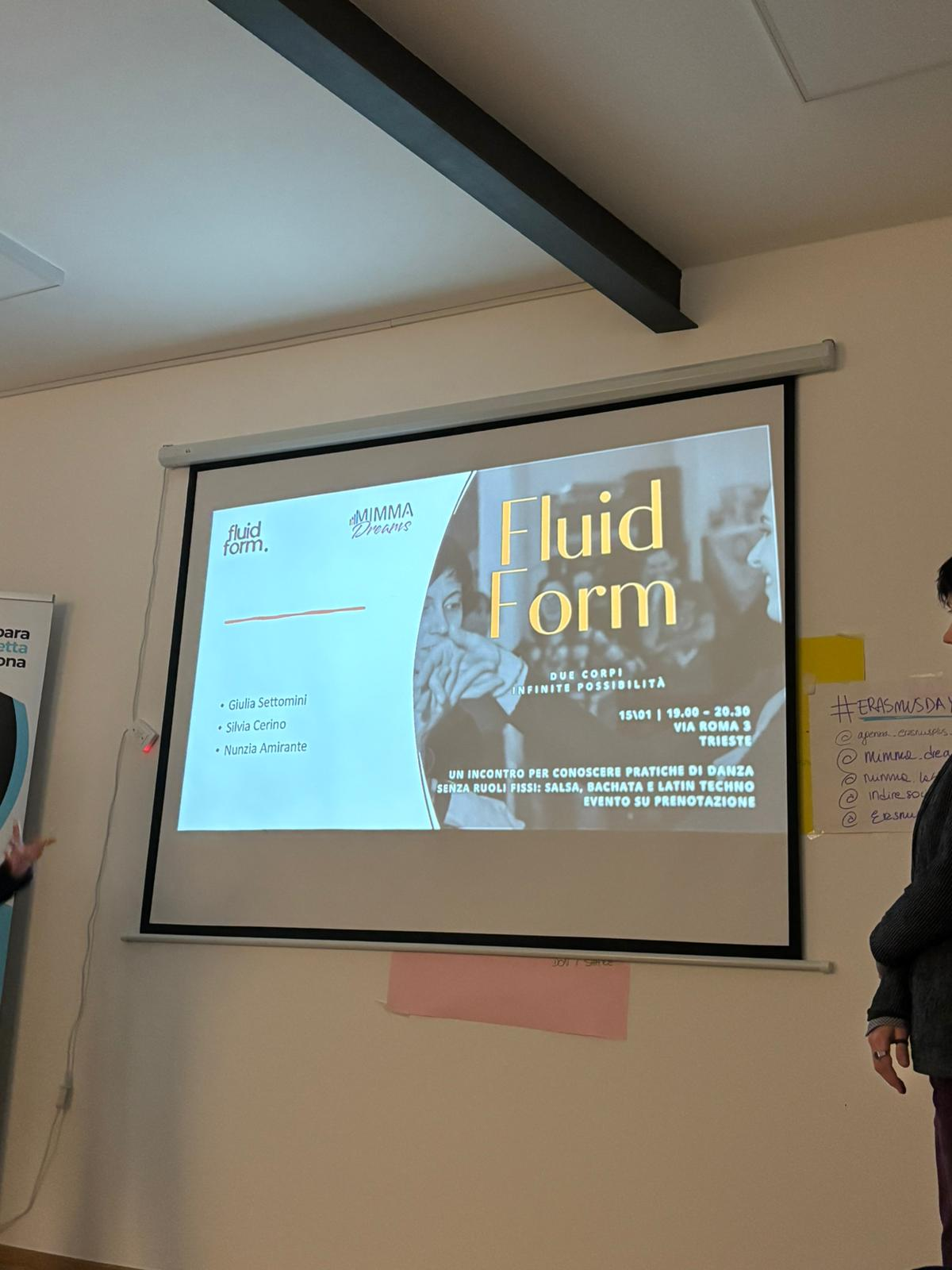
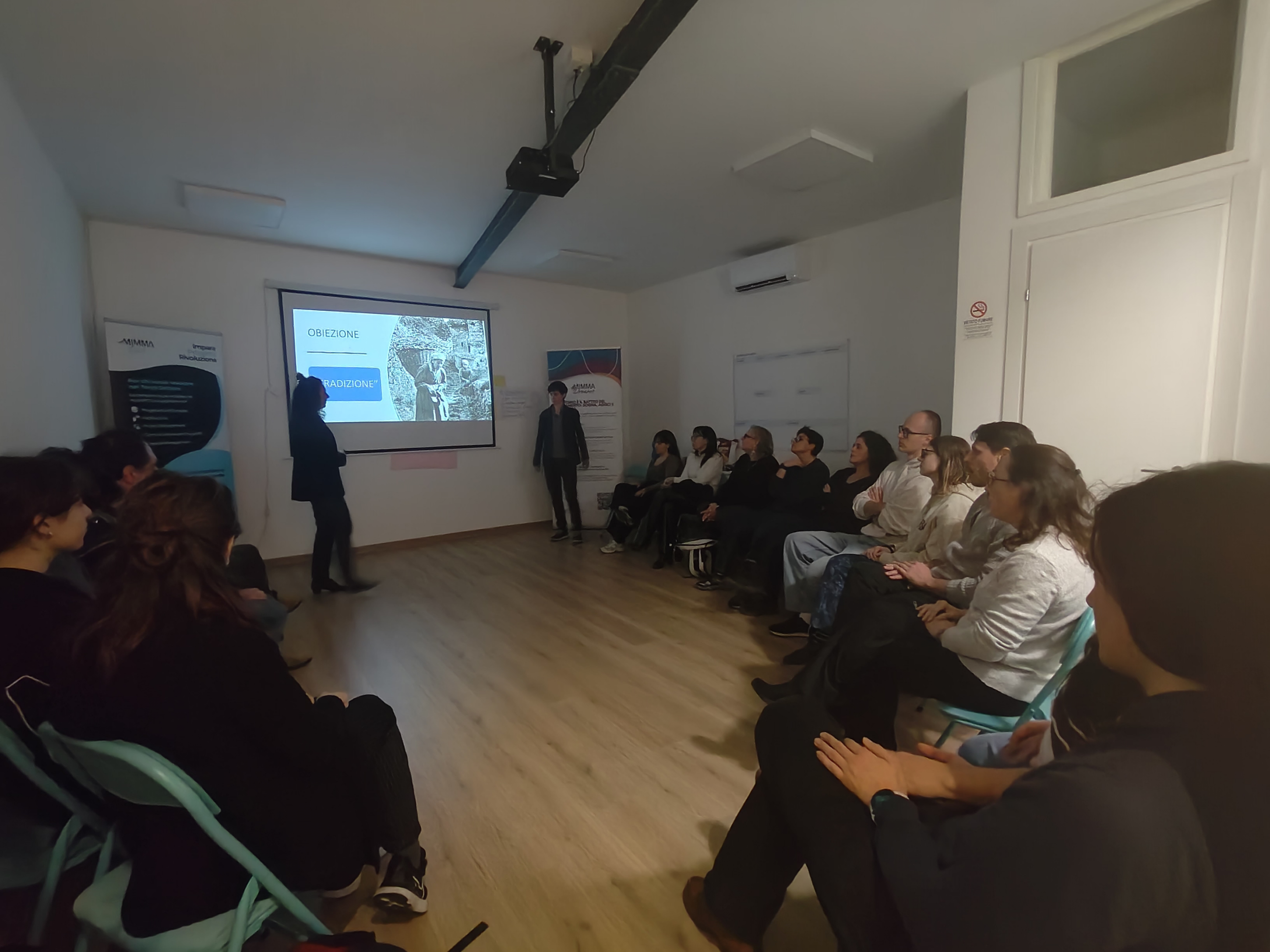
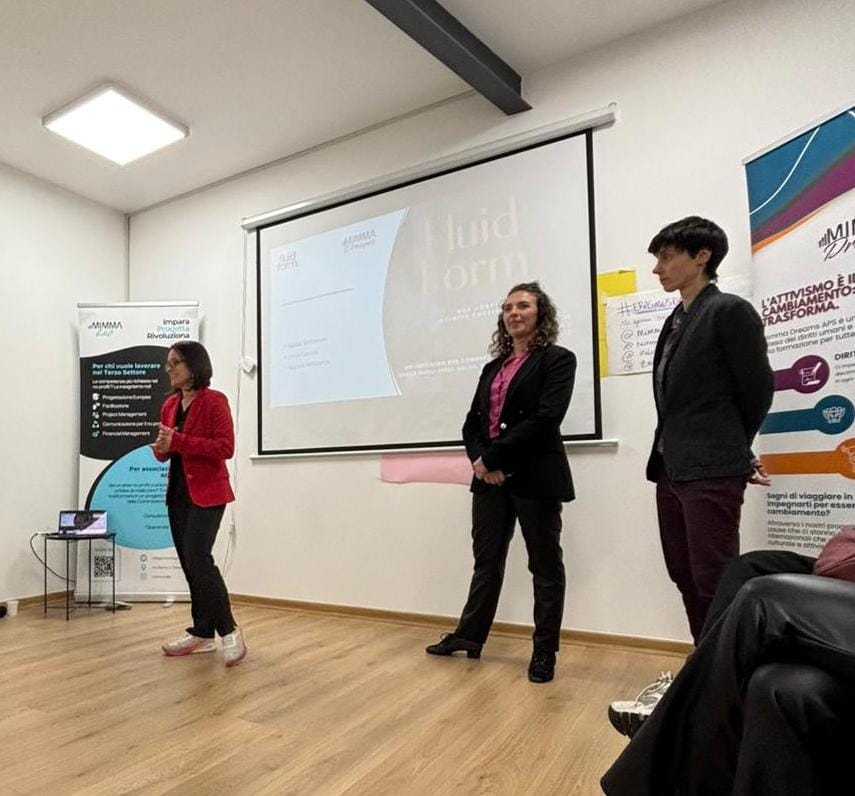
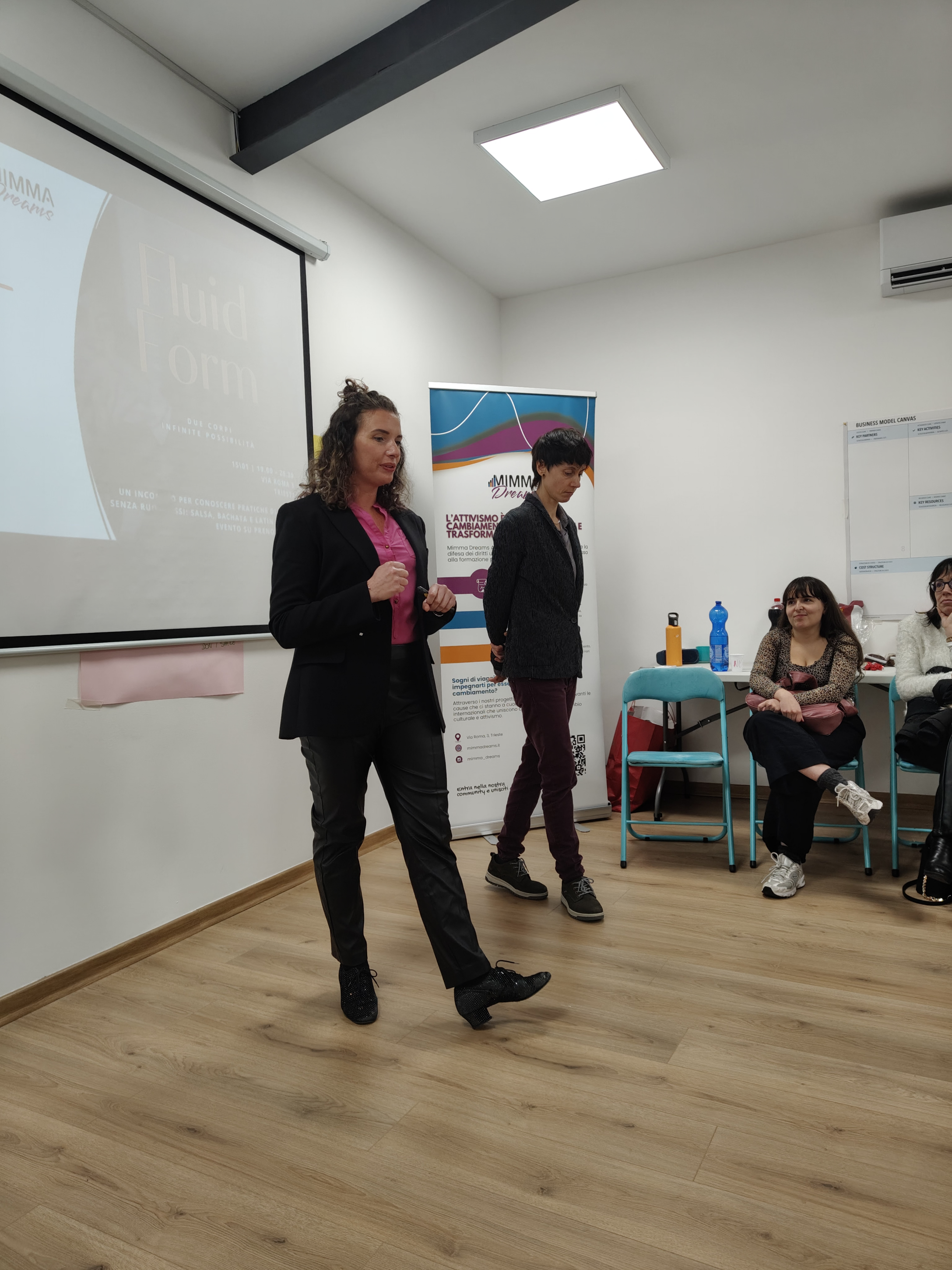
Yesterday, an event was held that did much more than present a new dance practice; it challenged the traditional way of understanding partner dance, bringing to the forefront a deep reflection on roles, power, identity, and relationships. The project is called Fluid Form and is based on an idea as simple as it is revolutionary: in dance, it shouldn't be gender that determines who leads and who follows, but the people themselves, in the moment they meet in space and create a connection, rather than a hierarchy. We delved into this topic in our podcast “A New Perspective” where, in the episode dedicated to sports, Giulia told us more about this approach ( https://youtu.be/D0oY5acImYY?si=A2V-F4k2RpOjZ-bn )
We at Mimma Dreams APS are excited to have made this project possible, but even more so to have provided skills and spaces to promote a truly inclusive idea of dance, free from stereotypes and capable of innovating the way we experience dance.
In social and performance dance, the structure has always remained surprisingly unchanged: the man leads, the woman follows, a model that seems natural only because it has been repeated endlessly, but in reality reflects much broader cultural dynamics, linked to the distribution of power and gender roles. Fluid Form was created precisely to dismantle this automatism and return to dance its most authentic function: to be a space for expression.
During yesterday's event, it became clear how this rigid structure has, over time, created more limits than opportunities; women forced to wait for someone to invite them to dance, men burdened with the pressure of always having to lead, non-binary people excluded a priori by a grammar that does not include them. All this has often turned the dance floor into a place of tension instead of freedom, yet dance should be exactly the opposite, a ground where you experiment, make mistakes, change, grow, and have fun.
Fluid Form proposes a radical change of perspective: there are no fixed roles, but mobile roles; leadership does not belong to a category of people, but circulates, passes from hand to hand, transforms, adapts. Who leads and who follows is not established beforehand, but is born within the relationship, in the silent dialogue of bodies moving together; it is a dance that stops being command and response and becomes proposal and listening.
One of the most significant moments of the event was the work on the Mirror Exercise, an exercise that makes this philosophy tangible: two people move together without a leader being declared, one proposes a minimal gesture, the other reflects it, then the roles switch without the need for verbal signals; in that almost imperceptible transition, something powerful happens, you stop controlling and start feeling.
The benefits of this approach emerged clearly throughout the evening: the distribution of power becomes more equitable, physical effort is shared, the pressure of always having to keep things under control melts away. Women are no longer forced to wait for a gentleman to be able to dance and discover the real possibility of leading without having to justify themselves; men, at the same time, free themselves from the idea that their value depends only on their ability to lead; everyone finds a more authentic space to be themselves.
Many wonder if this freedom risks creating confusion; the answer that emerged strongly is that confusion arises from the absence of listening, not from the absence of hierarchy. This technique does not eliminate structure, it makes it negotiable, and it is precisely this mobility that strengthens non-verbal communication, increases body awareness, and builds deeper trust between partners.
A central theme that emerged during the event was that of female leadership; in traditional dance, male leadership is often perceived as natural, almost biological. When women are given real space to lead, their emotional posture changes, confidence grows, and the image of always having to be reactive and never proactive is broken. Leading becomes an artistic gesture, but also a symbolic one, an act that speaks of autonomy, presence, and legitimacy.
In the same way, the project finally opens up an authentic space for inclusion, not just one declared in words, but one practiced with the body. Couples do not have to conform to a predetermined scheme, identities are not forced into rigid categories, the dance floor becomes a safe place where there is no need to explain yourself to exist; dance returns to being what it should always have been, a universal language, not an exclusive code.
The impact of this vision goes far beyond the world of dance; during the event, it was clear how Fluid Form functions almost like a miniature social laboratory. On the dance floor, you learn to manage power without dominating, to communicate without words, to trust others without losing yourself; these are skills that do not remain confined to dance, but are carried into everyday life, relationships, work, and society.
With this project, a new grammar of movement is introduced, based on interdependence and not hierarchy; it is a dance that speaks of relationship more than role, of presence more than performance.
Perhaps the next time we step onto the dance floor, we will no longer ask who leads and who follows; perhaps we will start asking ourselves how we want to move together, and in that question, simple and powerful, lies the entire revolution of Fluid Form.
If dance is a mirror of society, then it is time to change the reflection.